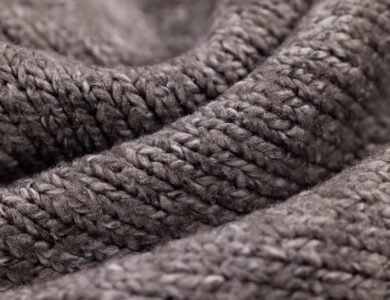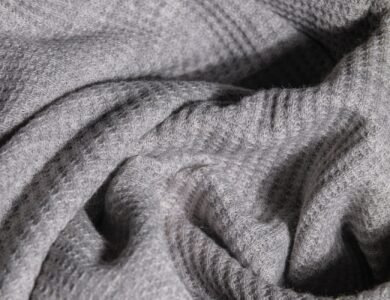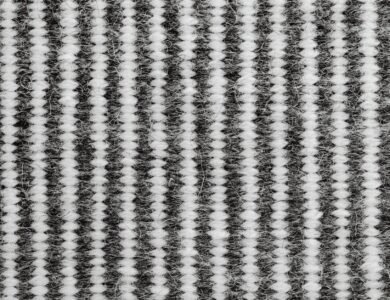
French terry pills faster when its loops are long and loose because the exposed yarns catch and break, while a tight loopback jersey resists pilling because the loops are short, anchored, and harder to pull out. Both are weft knits with loops on the back, but the length of that loop and how tightly the base knit locks it in decides whether surface fuzz turns into permanent pills or sheds away.
That tradeoff matters for hoodies, joggers, and relaxed blazers — a plush terry feels softer in store because the loops are raised higher, but that same height increases friction area and snag risk. You can spot the difference before buying by flipping the garment and running a light pinch test on the loops; if they lift more than 2mm or shift sideways easily, they will pill in the first 10 wears. The three checks below show exactly what to look for and why loop density predicts pilling better than price.
What French terry and loopback jersey actually share
Loopback jersey and French terry are not two completely different fabrics — French terry is a specific type of loopback where the back side keeps its uncut loops, while generic loopback is the family name for any weft knit with loops on the reverse. Both are typically knitted on single-jersey or fleece machines with a face yarn that forms the smooth outside and a backing yarn that forms loops inside.
The face can be 100% cotton, cotton-poly, or cotton-modal; the loop yarn is usually the same but can be polyester for stability. True French terry keeps loops unbrushed and uniform, usually 2-4mm long, with a cover factor high enough that you cannot easily see through the base when stretched 15%. When brands brush those loops, it becomes fleece or sweatshirt fleece, not terry — brushing breaks loops intentionally to create softness, but it also creates more free fiber ends that accelerate pilling.
Why loop length and anchoring control the first pill
Pilling in terry is a three-stage process: fuzz formation as individual fibers break from friction, entanglement as those broken ends roll into a ball, and anchoring where the base yarn holds the ball so it cannot fall off. Long loops create more surface area for stage one and have fewer anchoring points per millimeter, so stage three is stronger.
Think of each loop as a small arch standing off the base. If the arch is short and tightly tucked into the knit, you have to break both legs to free a fiber end. If the arch is tall and loose, one leg can slip and the loop can distort, exposing more yarn to abrasion at the knee, cuff, or side seam where bags rub.
Yarn twist matters alongside length. Low-twist, combed cotton loops feel silkier but have lower cohesion, so individual fibers escape faster. A slightly higher twist or a core-spun yarn with a polyester filament inside gives the loop more internal strength without losing hand-feel, which is why some mid-range joggers outlast premium low-twist French terry despite costing less.
Interactive simulation showing how increasing loop height from 2mm to 5mm reduces anchoring and raises early pilling risk.
French terry vs loopback jersey: where pilling actually starts
In French terry, the first pills appear on the inside of cuffs and along the side seam tape where loop yarns rub against a bag or seatbelt. Because loops are exposed, they abrade before the face yarn does. You will see tiny white tips on dark fabric first, then full pills by wear 8-12 if loops are long.
In a tight loopback jersey with short, locked loops, the first failure is usually on the outside face from friction against other clothes, not inside. The fabric is denser, so face yarns break slower and pills are smaller. That is why a 340 GSM loopback jogger with compact loops often looks cleaner after 20 washes than a 280 GSM plush French terry hoodie that felt softer at purchase.
| Feature | French Terry (plush) | Tight Loopback Jersey |
|---|---|---|
| Loop height | 3-5mm, soft hand | 1.5-2.5mm, firmer hand |
| Base cover factor | Medium, some light gaps when stretched | High, minimal light penetration at 15% stretch |
| First pill location | Inside cuff, side seam tape, underarm | Outside thigh, seat, pocket edge |
| Pill size / permanence | Larger, anchored by loop legs | Smaller, more likely to shed with washing |
How to inspect loop integrity in store in 30 seconds
You do not need a microscope — three quick tests reveal loop quality.
1. Flip and look for uniformity
Turn the hem inside out. Loops should be even height and evenly spaced, like small U-shapes in rows. If some loops are crushed flat, others standing tall, or you see pulled threads and gaps, the knitting tension was uneven and those tall loops will pill first.
2. Pinch and lift
Pinch a small area of loops between thumb and forefinger and lift gently 2-3mm. In a tight loopback, the fabric lifts as a sheet and loops stay locked. In a loose terry, you can lift individual loops away from the base or shift them sideways with little resistance — that mobility equals future pilling.
3. Light and stretch check
Hold a single layer to overhead light and stretch 15%. Good loopback shows a uniform dim glow with little bright pinpoint. If you see bright pinholes or the base yarns separate visibly, the cover factor is low and loops have less support.
Fail: uneven, crushed, pulled gaps
Fail: single loop lifts, slides sideways
Fail: bright points, base separates
Static checklist translating loop height, mobility, and base density into a quick in-store flow.
Which to choose for longevity vs softness
If you prioritize softness for home wear and do not mind occasional de-pilling, a plush French terry at 280-310 GSM with longer loops is fine — just wash inside out cold, no high heat, and avoid fabric softener that lubricates fibers and accelerates fiber escape. Air dry 80% and reshape.
If you want joggers, hoodies, or relaxed trousers that stay clean for office-casual or travel, aim for tight loopback jersey at 320-360 GSM, with combed cotton or cotton-modal face and a compact loop backing. Labels listing 60% cotton / 40% polyester or cotton-modal-poly blends with higher twist often outlast 100% low-twist cotton French terry because polyester in the loop adds strength, though pure cotton with tight construction can still perform well if GSM is high enough.
The loop decides the pill, not the brand name
French terry feels more luxurious on first touch because its loops are taller, but height is exactly what raises pilling risk when base density is low. Loopback jersey looks flatter but holds its surface longer because short, anchored loops resist lifting and breaking. Read the inside, not the price tag — uniform short U’s, low lift mobility, and minimal light gaps predict a garment that stays neat past 30 wears, while uneven tall loops that slide sideways predict early fuzz even at premium prices.
Frequently Asked Questions
Is French terry always worse than loopback jersey for pilling?
No. A dense French terry at 340 GSM with uniform 2mm loops and higher twist can outperform a loose 260 GSM loopback. The failure is not the category name but loop height, base cover factor, and yarn twist. Check those three directly.
Can you fix pilling in French terry once it starts?
You can reduce visibility but not reverse loop damage. Use a low-aggression sweater stone or fabric comb on the face, and trim inside cuff pills with a small electric shaver on low. High heat and aggressive brushing make it worse by breaking more fibers.
Why does my loopback jogger pill inside first?
Inside pills come from loop yarns rubbing against skin, seatbelts, or bag straps. If loops are long and mobile, friction breaks fiber ends that then tangle. Washing inside out and avoiding rough interior seams delays it.
Is 100% cotton French terry less durable than cotton-poly?
Not inherently. Cotton-poly loop yarn is stronger and pills later, but pure cotton with tight construction and 320+ GSM can last well. Low-twist 100% cotton with long loops and low density is the highest-risk combination regardless of fiber.